Scenes, not gadgets
“Good night” can lock the doors, dim the lights, set the thermostat and arm the cameras in one tap, instead of five apps.
Home Automation & Smart Home
We design and install smart home systems around a solid wired network: lighting, shades, thermostats, locks, cameras, audio and video that act together. One app, simple scenes, and nothing that stops working when the internet blinks.
What you get
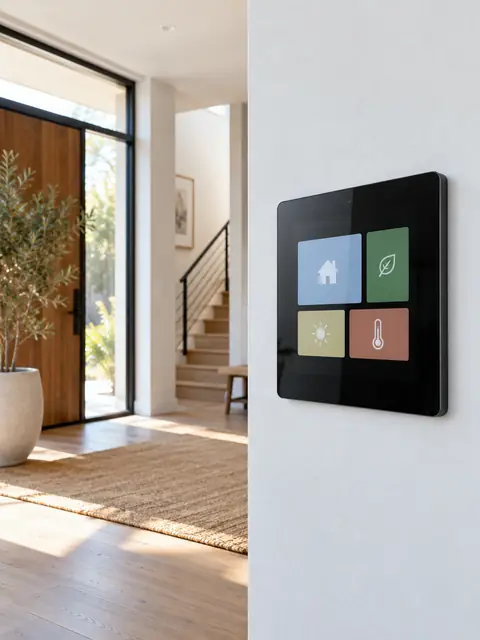
“Good night” can lock the doors, dim the lights, set the thermostat and arm the cameras in one tap, instead of five apps.
Old brownstone, new condo or multi-family: we plan around your walls, your electrical and your daily routine.
Good systems keep running their core functions on your own network, so lights and locks do not depend on a distant server.
Wall keypads, voice, and a phone app: guests, kids and grandparents can all use it without a tutorial.
Start with lighting or one floor and add rooms later, as long as the foundation (network and wiring) is planned up front.
Systems change. We handle updates, new devices and troubleshooting so it keeps working.
What most people don’t know
Plain answers from the install side, so you can decide with the full picture.
There are two very different worlds. Professional platforms (such as Control4, Crestron Home, Savant and Lutron) are designed, programmed and supported by an installer, and are built for whole-home control with wall keypads. Consumer ecosystems (Apple Home, Google Home, Amazon Alexa, SmartThings) are quick to start and cheap, but you configure and maintain them yourself. Open platforms like Home Assistant are very flexible and run locally, but need someone who enjoys tinkering. The right choice depends on your home, your budget and who will maintain it, not on the logo.
Matter is an industry standard that lets devices from different makers work with Apple, Google and Amazon at the same time, mostly over your local network. Thread is a low-power mesh radio that many Matter devices use. Both are real and growing, but not every device or feature supports them yet, so a good installer still checks compatibility before you buy.
Many smart light switches need a neutral wire in the switch box. In older NYC buildings it is often missing. There are switches and dimmers designed for no-neutral boxes, and wireless keypads that avoid the problem entirely. Knowing this before you buy forty switches saves a lot of returns.
Lag, dropped devices and “no response” errors usually trace back to weak WiFi or a crowded network, not the devices. We treat network and wiring as part of the smart home, not an afterthought.
How it works
We look at the space, talk through how you use it and what you want to fix.
A written plan and clear price. Changes are agreed before work happens.
Neat, labeled work, with respect for your home or business.
We test everything, walk you through it and stay available after.
FAQ
It depends on the platform. Some systems use a local controller, some use a hub built into a speaker or router, and some have optional cloud features that cost extra. We tell you the full ongoing cost before you commit.
Yes. Many systems use wireless switches and keypads, so we can often work without opening walls. If you do want hidden wiring, we explain what is realistic first.
Core functions like lights, switches and many locks can keep working locally, depending on the platform. Voice assistants and remote access generally need internet. We design for the local-first case.
There is no best brand for everyone. Tell us how you live, which phones you use and your budget, and we will recommend what fits and explain the trade-offs.
Privacy depends on the products chosen. We prefer systems that keep video and control on your own network where possible, and we explain what each product sends to the cloud.
A short description is enough. We will reply with next steps and a written quote.